
England has six main types of golf courses, and few countries pack as much variety into a single golf trip. In one week you can play a seaside links in the morning wind, a pine-framed heathland near London and a parkland course in the grounds of a country estate.
Each type of course has its own character. The ground underfoot, the way the ball runs and even the clubs you reach for change from one to the next. Here’s what to expect from each of the main types of golf courses, and where to find the best of them.
By Golf Tourism England · Last updated 26 October 2026
The six types of golf courses at a glance
| Type | Ground | How it plays | Where to find it | Course to try |
|---|---|---|---|---|
| Links | Sandy dunes by the sea | Firm, fast and windy | Merseyside, Lancashire, Kent, Norfolk, Devon, Cornwall, Northumberland | Royal Birkdale |
| Heathland | Sandy soil with heather, gorse and pine | Firm and quick-draining | Surrey, Berkshire and Hampshire | Sunningdale |
| Parkland | Mature trees and estate grounds | Soft, lush and receptive | Across England, especially the Midlands and Home Counties | The Belfry |
| Downland | Rolling chalk hills | Firm, open and hilly | South Downs, North Downs and Wiltshire | Tidworth Garrison |
| Moorland | High upland with heather and bracken | Breezy, with big views | Yorkshire, around Leeds and Sheffield | Moortown |
| Clifftop | Cliff edges above the sea | Firm, windy and scenic | Cornwall, Devon, Dorset and Northumberland | Thurlestone |
Jump to: Links · Heathland · Parkland · Downland · Moorland · Clifftop and coastal · FAQs
Links golf

Links is where golf began: courses laid out on the sandy strip of land that “links” the sea to the farmland behind it. Expect rolling dunes, firm fast turf, deep pot bunkers and very few trees.
The wind is part of the game. The same hole can play as a drive and a wedge one day and two long woods the next. The ground is firm, so the ball runs, and the low bump-and-run shot is often your best friend.
Links courses are built on sand, so rain drains away quickly. That makes them some of the best courses to play all year round. When inland courses are wet or closed in winter, the links are usually open and playing well.
What to expect: firm, fast fairways, tall dune grasses, hidden bunkers and ever-changing wind.
Where to find it: England’s links coastline is one of the finest anywhere. The Lancashire and Merseyside coast is home to several Open Championship venues, and Kent, Norfolk, Devon, Cornwall and Northumberland all have classic links.
Courses to try:
- Royal Birkdale, Southport (North West)
- Royal Liverpool, Hoylake (North West)
- Royal St George’s, Sandwich (Kent & Sussex)
- Royal North Devon, Westward Ho! (South West), England’s oldest links
- Saunton, North Devon (South West)
- Hunstanton, Norfolk (East Anglia)
- Goswick, Northumberland (North East)
Good to know: links are a great choice for autumn, winter and early spring trips. Pack waterproofs and layers whatever the forecast, and allow extra balls for the rough.
Heathland golf
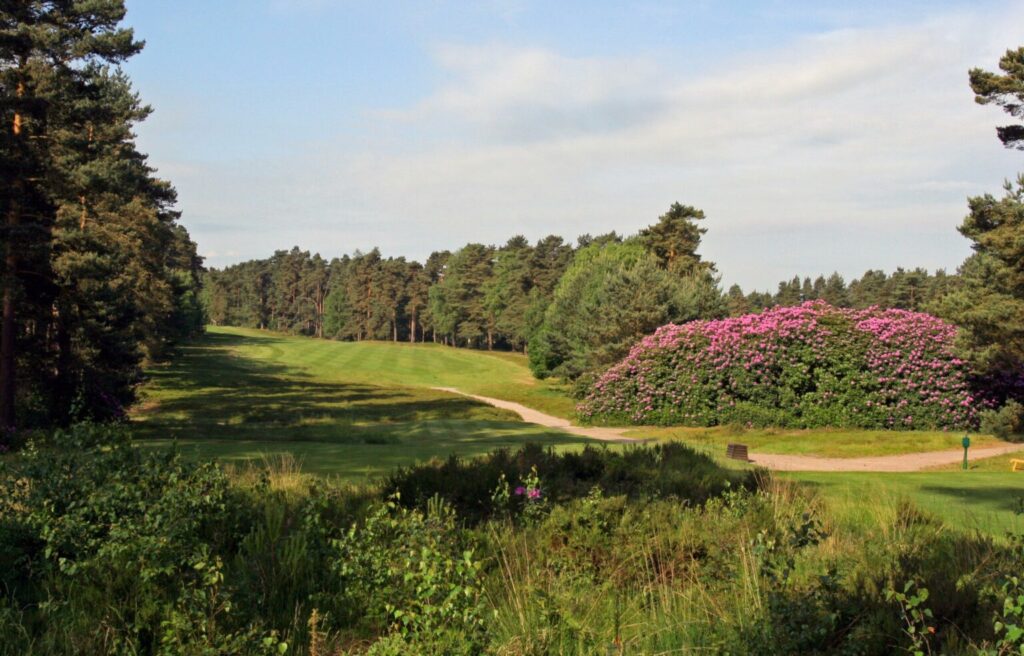
Heathland is England’s great inland style, and many golfers think it’s the most beautiful. These courses sit on sandy soil among heather, gorse, silver birch and pine, so they drain well and play firm all year.
Like links, heathland sits on sand, so rain soaks away quickly. The best heathland courses stay firm and playable right through autumn and winter, when many clay-based inland courses turn soft and muddy.
The best were built in the early 1900s, when golf was moving inland from the coast. Sandy ground gave designers natural bunkers and springy turf, with the trees adding shelter and colour. Late summer, when the heather turns purple, is a lovely time to visit.
What to expect: firm, quick-draining turf, heather-lined fairways, sandy bunkers and peaceful tree-framed holes.
Where to find it: the heart of English heathland is the sandy belt of Surrey, Berkshire and Hampshire, just west of London. There are also fine heathland courses in Nottinghamshire, Lincolnshire, Staffordshire and Suffolk.
Courses to try:
- Sunningdale Old and New, Berkshire
- Walton Heath, Surrey
- Swinley Forest, Berkshire
- The Berkshire, Red and Blue courses
- Woking, Surrey
- Woodhall Spa (Hotchkin), Lincolnshire
- Notts (Hollinwell), Nottinghamshire
Good to know: heathland is ideal for a trip based near London, as many of the top courses are within an hour of Heathrow. It’s also a great choice for an off-season trip.
Parkland golf
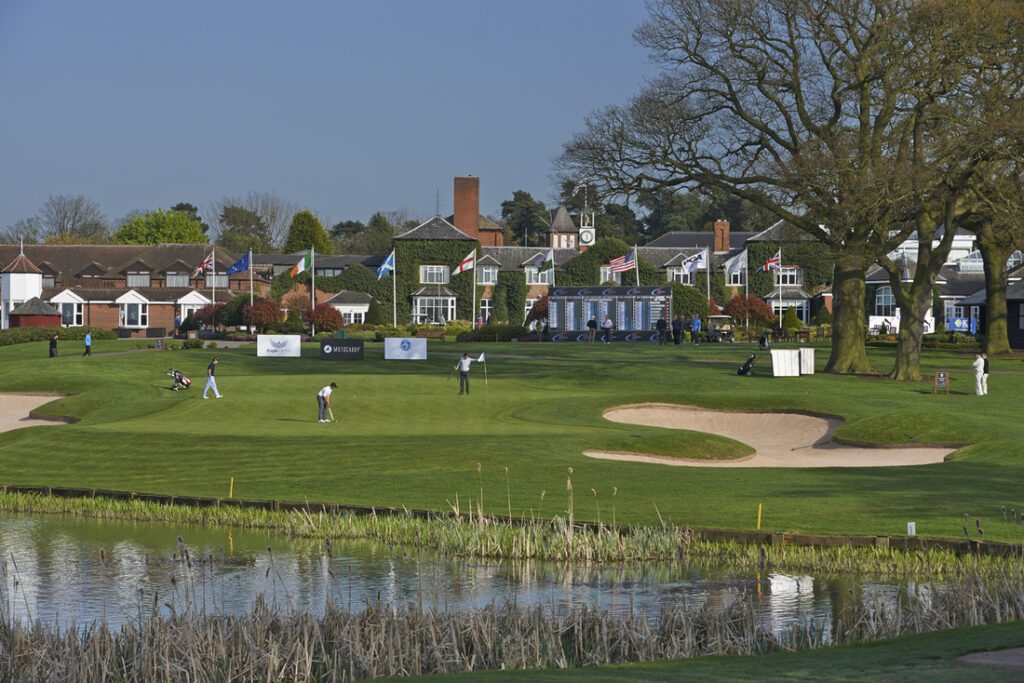
Parkland courses are laid out through mature, tree-lined grounds, often on old country estates. Think lush fairways, specimen oaks and cedars, lakes and streams, and a grand clubhouse at the end of the round.
The turf is softer than on links or heathland, so the ball stops where it lands. That rewards high, accurate approach shots, and the trees punish a wayward drive. Many of England’s resort courses and tournament venues are parkland.
What to expect: lush green fairways, tree-lined holes, water features and softer, receptive greens.
Where to find it: all over England, especially the Midlands, the Home Counties around London and the North East.
Courses to try:
- The Belfry (Brabazon), Warwickshire
- The Grove, Hertfordshire
- Stoke Park, Buckinghamshire
- Moor Park, Hertfordshire
- JCB Golf & Country Club, Staffordshire
- Bowood, Wiltshire
- Close House, Northumberland
Good to know: parkland is at its best from late spring to early autumn. Many courses sit within hotel resorts, so it’s easy to stay and play in one place.
Downland golf
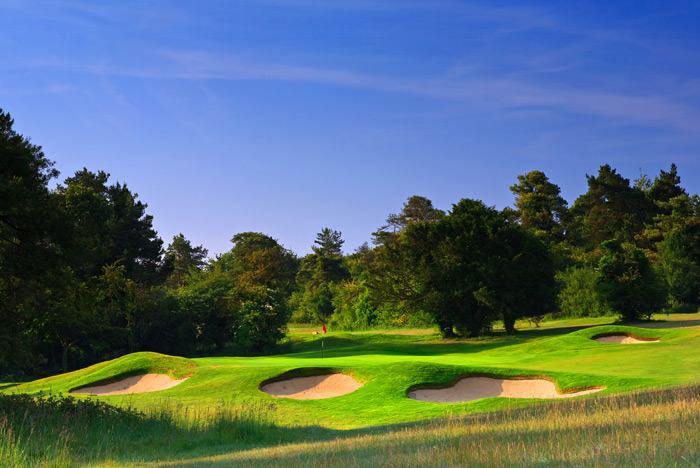
Downland golf is played on the rolling chalk hills of southern England. The turf is short, springy and fast-draining, and the views from the tops of the downs can stretch for miles.
Despite the name, you’ll spend most of your round going up. “Down” comes from the Old English word dūn, meaning a hill, so the downs are actually the hills. Centuries of sheep grazing kept the grass on these slopes short and fine, which made it perfect ground for golf.
With few trees and plenty of open sky, downland can feel like links golf in the hills. The ball runs on the firm chalk, the wind blows across the ridges, and slopes and hollows shape every shot. It’s a style that’s special to England and well worth seeking out.
What to expect: rolling, open ground, firm turf, sweeping views and plenty of uphill and downhill lies.
Where to find it: the South Downs in Sussex and Hampshire, the North Downs in Kent and Surrey, and the chalk uplands of Wiltshire.
Courses to try:
- Goodwood, The Downs, West Sussex, a James Braid design high on the Goodwood Estate
- Hockley, near Winchester, Hampshire
- Seaford, East Sussex, the oldest golf club in Sussex
- The Dyke, near Brighton, one of the highest courses in southern England
- Lewes, East Sussex, opening out onto the chalk cliffs
- Worthing, West Sussex, with two Harry Colt courses from the 1920s
- Tidworth Garrison, Wiltshire
- Walmer and Kingsdown, Kent, on the clifftops above the White Cliffs
- Kingsdown, near Bath
Good to know: our two South Downs tours are the easiest way to play several downland courses in one trip. South Downs (East) is based in Brighton, with rounds at Seaford, The Dyke, Lewes and Worthing. South Downs (West) is based on the Goodwood Estate, with rounds at Goodwood’s Downs and Park courses, Cowdray Park and Hockley.
Moorland golf
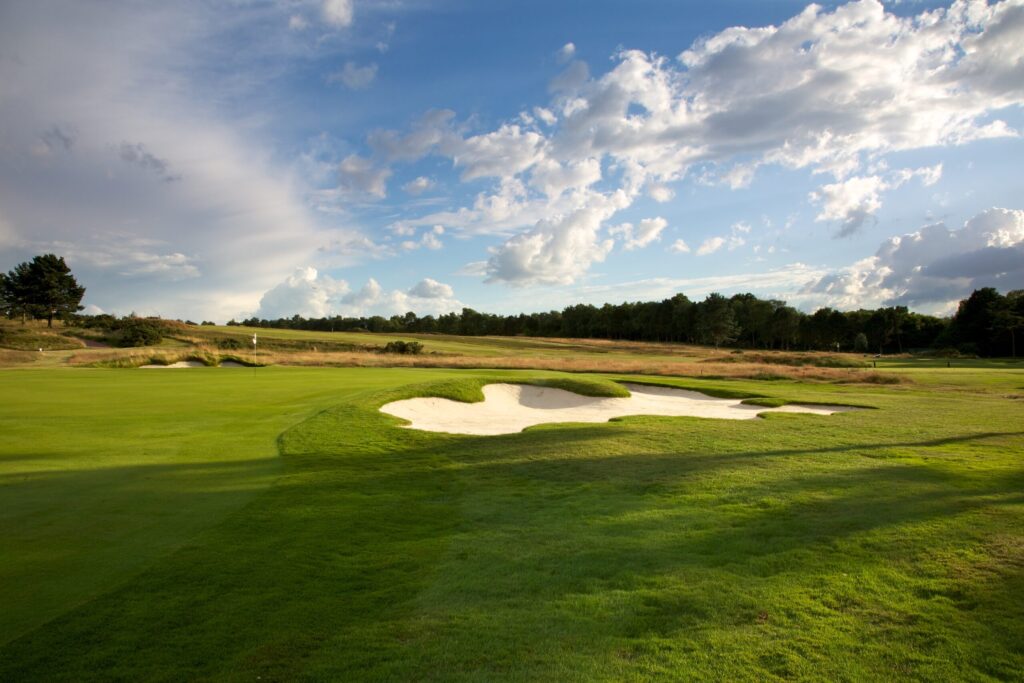
Moorland courses sit high on open upland, among heather, bracken and rocky outcrops. They share much with heathland, but with a wilder, more exposed feel and big views over the surrounding valleys.
The great moorland courses of Yorkshire were shaped by Dr Alister MacKenzie, who later designed Augusta National and Cypress Point. His bold greens and clever bunkering are still a joy to play.
What to expect: heather and bracken, sandy upland turf, dramatic views and breezy conditions.
Where to find it: mostly in the north of England, especially around Leeds, Harrogate and Sheffield in Yorkshire.
Courses to try:
- Moortown, Leeds
- Alwoodley, Leeds
- Sand Moor, Leeds
- Hallamshire, Sheffield
Good to know: moorland courses can be cooler and windier than the valleys below, so bring an extra layer.
Clifftop and coastal golf

Clifftop courses run along the edge of the land high above the sea, rather than down among the dunes. You get the sea air and the wind of links golf, with some of the most spectacular views in the game.
The turf is often firm and fast, and holes play along, across and towards the cliff edge. Southern England’s coastline, from Cornwall to Dorset, is full of them.
What to expect: sea views on almost every hole, firm turf, strong breezes and dramatic holes along the cliffs.
Where to find it: Cornwall, Devon and Dorset in the South West, and the Northumberland coast in the North East.
Courses to try:
- Thurlestone, South Devon
- East Devon, Budleigh Salterton
- Mullion, Cornwall
- Lyme Regis, Dorset
- Bamburgh Castle, Northumberland
Good to know: these courses make a perfect add-on to a coastal holiday, and many sit close to the South West Coast Path.